AT&T Fiber vs. Spectrum: Which Internet Is Right for You?
AT&T Fiber offers blazing-fast speeds and reliability, while Spectrum provides wide availability with no data caps. Find out which is best for your home.
Choosing an internet service provider can feel like a major decision, and for good reason—it’s the connection that powers your work, entertainment, and communication. Two of the biggest names you'll encounter are AT&T Fiber and Spectrum. While both offer high-speed internet, they are built on fundamentally different technologies. AT&T Fiber uses a 100% fiber-optic network to deliver data as pulses of light, while Spectrum uses a robust hybrid fiber-coaxial (HFC) cable network.
This core difference in technology leads to significant variations in speed, performance, and reliability. AT&T Fiber is known for its symmetrical speeds and cutting-edge performance, but its availability is more limited. Spectrum, on the other hand, boasts a massive coverage area and offers excellent value, but its cable technology has certain limitations. This guide will break down the key differences between AT&T Fiber and Spectrum to help you decide which service is the best fit for your household's needs. The first step, however, is always to find out which providers are actually available at your specific address, which is where a service like KonnectX can help by showing you every option in one place.
Technology: How Fiber and Cable Internet Differ
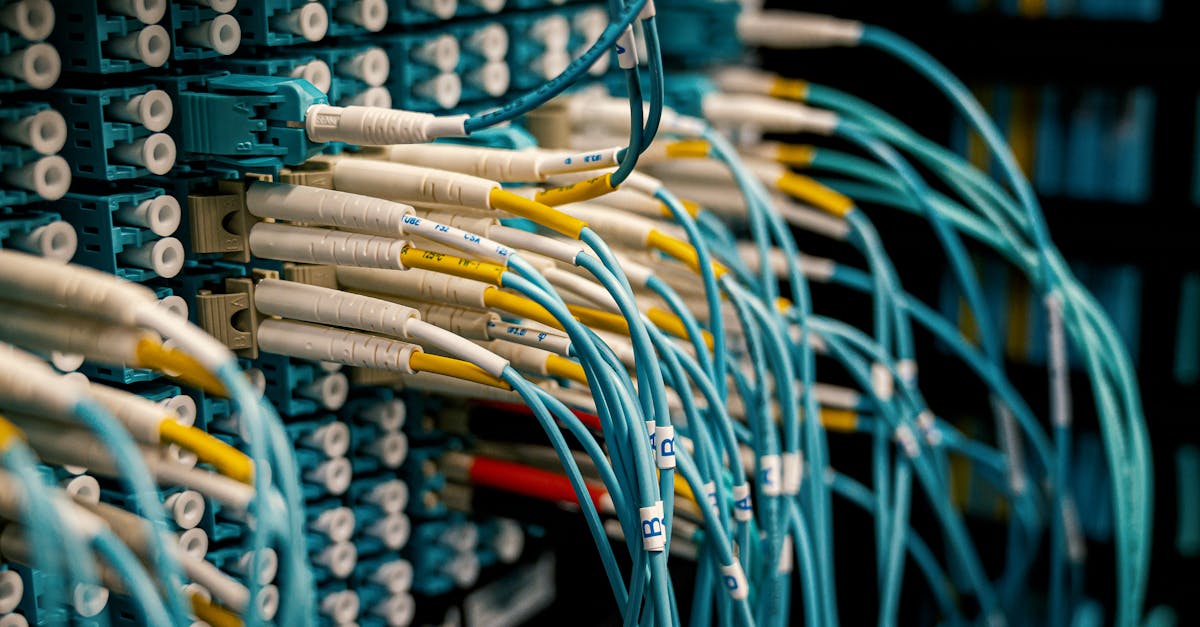
The most significant distinction between AT&T Fiber and Spectrum lies in the infrastructure that delivers internet to your home. AT&T Fiber is a Fiber-to-the-Home (FTTH) service. This means a fiber-optic cable, made of glass strands as thin as a human hair, runs directly to your residence. Data travels through these cables as light signals, allowing for incredibly high speeds and a stable, consistent connection that isn't easily affected by weather or electrical interference.
Spectrum's network is a hybrid fiber-coaxial (HFC) system. This means it uses a fiber-optic backbone to move data across large distances to neighborhoods, but the final connection from the local node to your home is completed over a traditional coaxial cable—the same kind used for cable TV. While this technology is capable of delivering gigabit download speeds, it's a shared connection among homes in your area and doesn't have the same capacity for upload speeds as a pure fiber network.
Speed and Performance: Symmetrical vs. Asymmetrical
When it comes to speed, the conversation centers on symmetrical versus asymmetrical connections. AT&T Fiber is famous for its symmetrical speeds, meaning your upload speed is the same as your download speed. If you have a 1 Gbps plan, you get 1,000 Mbps for both downloading and uploading. This is a game-changer for activities like video conferencing, uploading large files to the cloud, live streaming, and competitive online gaming, where sending data quickly is just as important as receiving it.
Spectrum, like most cable providers, offers asymmetrical speeds. Its download speeds are very fast and more than sufficient for streaming 4K movies, browsing, and downloading games. However, its upload speeds are significantly lower. For example, a plan with a 1,000 Mbps download speed might only have a 35 Mbps upload speed. For the average user who primarily consumes content, this is perfectly fine. But for remote workers, content creators, or households with multiple people on video calls simultaneously, the lower upload speed can become a bottleneck.

Availability: Where Can You Get AT&T Fiber and Spectrum?
Availability is often the deciding factor in the AT&T Fiber vs. Spectrum debate. Spectrum's cable network is one of the largest in the United States, covering vast areas in over 40 states. Because it leverages existing cable TV infrastructure, there's a high probability that if you can get cable TV, you can get Spectrum internet. This widespread availability makes it a reliable option for millions of households.
AT&T Fiber, while expanding rapidly, is not yet as widely available. Building a new fiber-optic network from the ground up is a massive and expensive undertaking, so its footprint is concentrated in specific metropolitan areas and growing suburbs. It's crucial to note that AT&T also offers internet over older DSL or hybrid-fiber technologies in areas where pure fiber hasn't been installed. These plans are much slower and not comparable to their fiber service. The only way to know for sure what's offered at your home is to check your specific address. Using a tool like KonnectX allows you to compare AT&T Fiber, Spectrum, and any other providers like Verizon Fios or T-Mobile 5G Home Internet that service your exact location.

Pricing, Contracts, and Data Caps
Both AT&T Fiber and Spectrum have adopted consumer-friendly policies regarding contracts and data caps. For their standard internet-only plans, neither provider typically requires customers to sign a long-term annual contract. This flexibility allows you to change or cancel your service without facing hefty early termination fees, which is a major advantage in a competitive market.
Similarly, both companies offer unlimited data. You don't have to worry about tracking your usage or paying overage charges for streaming, gaming, or downloading as much as you want. When it comes to pricing, both often feature promotional rates for the first 12 or 24 months, after which the price increases to a standard rate. AT&T Fiber's pricing is often very straightforward, sometimes including the Wi-Fi equipment rental in the monthly fee. Spectrum's pricing is also competitive, though equipment rental may be a separate line item on your bill. Always read the fine print to understand the full monthly cost after the initial promotional period ends.

Reliability and Customer Satisfaction
One of the key benefits of a fiber-optic connection is its superior reliability. Because data travels via light over a dedicated line to your home, the connection is less susceptible to slowdowns during peak usage hours—those evening hours when everyone in your neighborhood is streaming and gaming. The glass fibers are also immune to the radio frequency interference that can affect cable networks and are more durable against harsh weather conditions.
While Spectrum's HFC network is highly reliable, its architecture means you share bandwidth with other customers connected to the same neighborhood node. During peak times, you might experience some speed degradation, although cable providers have become much better at managing network congestion. In terms of customer satisfaction, ratings for both companies can vary significantly by region. However, fiber providers like AT&T generally score higher in national surveys due to the inherent stability and speed of the technology.
Making the Choice: Who Should Get AT&T Fiber vs. Spectrum?
So, which provider should you choose? The answer depends entirely on your priorities and what's available at your address. AT&T Fiber is the superior choice for users who demand the absolute best performance. If you're a serious online gamer, a content creator uploading high-resolution videos, or live in a smart home with dozens of connected devices, the symmetrical speeds and rock-solid reliability of fiber are unmatched. It's built for the future and can handle virtually any online activity you throw at it without breaking a sweat.
Spectrum is an excellent and often more accessible all-around option. If your primary internet activities are streaming shows, browsing the web, checking email, and casual gaming, Spectrum's fast download speeds are more than capable of providing a great experience. Its massive availability means it's an option for far more people, and its straightforward plans with no data caps make it a dependable choice for families and individuals alike. It delivers great value and performance for the majority of internet users.
Ultimately, you can't sign up for a service that isn't offered at your home. The best first step is always to perform an address-specific search. Services like KonnectX simplify this process by showing you a complete list of providers—from fiber and cable to 5G home internet—available at your address. Our experts can then help you compare the plans side-by-side and handle the ordering process in a single call, all at the same price as going directly to the provider.
Key takeaways
- AT&T Fiber uses a 100% fiber-optic network, offering symmetrical speeds (equal upload and download) and superior reliability.
- Spectrum uses a hybrid fiber-coaxial cable network, providing very fast download speeds but much slower uploads. It is more widely available than AT&T Fiber.
- Neither provider typically enforces data caps or requires long-term contracts for their standard internet-only plans.
- AT&T Fiber is ideal for heavy internet users, gamers, remote workers, and smart homes, while Spectrum is a strong all-around option for streaming and general use.
- The best choice depends on what's available at your exact address. Use a comparison service to see all your options before deciding.
FAQ
Is AT&T Fiber really faster than Spectrum?
Yes, especially for uploads. While both offer similar top-tier download speeds (1 Gbps or higher), AT&T Fiber's upload speeds match its download speeds. Spectrum's upload speeds are significantly slower, which can impact video calls, gaming, and uploading large files.
Does Spectrum have data caps?
No, Spectrum does not have data caps on its residential internet plans. You can use as much data as you need without worrying about overage fees.
Is fiber internet more reliable than cable?
Generally, yes. Fiber-optic connections are less prone to slowdowns during peak usage hours because you have a dedicated line to your home. They are also more resistant to weather and electrical interference than cable networks.
Do I need a contract for AT&T Fiber or Spectrum?
Typically, no. Both providers usually offer their internet-only plans on a no-contract basis, meaning you can cancel at any time without paying an early termination fee.
Can I use my own router with AT&T Fiber and Spectrum?
Yes, you can use your own router with both providers. However, with AT&T Fiber, you must use their provided gateway to connect to the network, but you can disable its Wi-Fi and connect your own router behind it. Spectrum is more flexible, typically allowing you to use your own modem and router to avoid equipment fees.
How can I find out which provider is available for me?
The best way is to use a provider comparison service like KonnectX. By entering your address, you can see a full list of all available internet providers and plans, including fiber, cable, 5G, and satellite, helping you make an informed decision.
Is Spectrum internet good for gaming?
Spectrum is good for gaming due to its fast download speeds. However, AT&T Fiber is generally considered better for competitive online gaming because of its lower latency (ping) and extremely fast upload speeds, which ensure a smoother, more responsive experience.
What's the difference between AT&T Internet and AT&T Fiber?
AT&T Fiber refers specifically to their 100% fiber-optic internet service. 'AT&T Internet' is a broader brand name that can also refer to their older, slower services that use DSL or a hybrid of fiber and copper lines. If you want the best performance, make sure you're signing up for an AT&T Fiber plan.