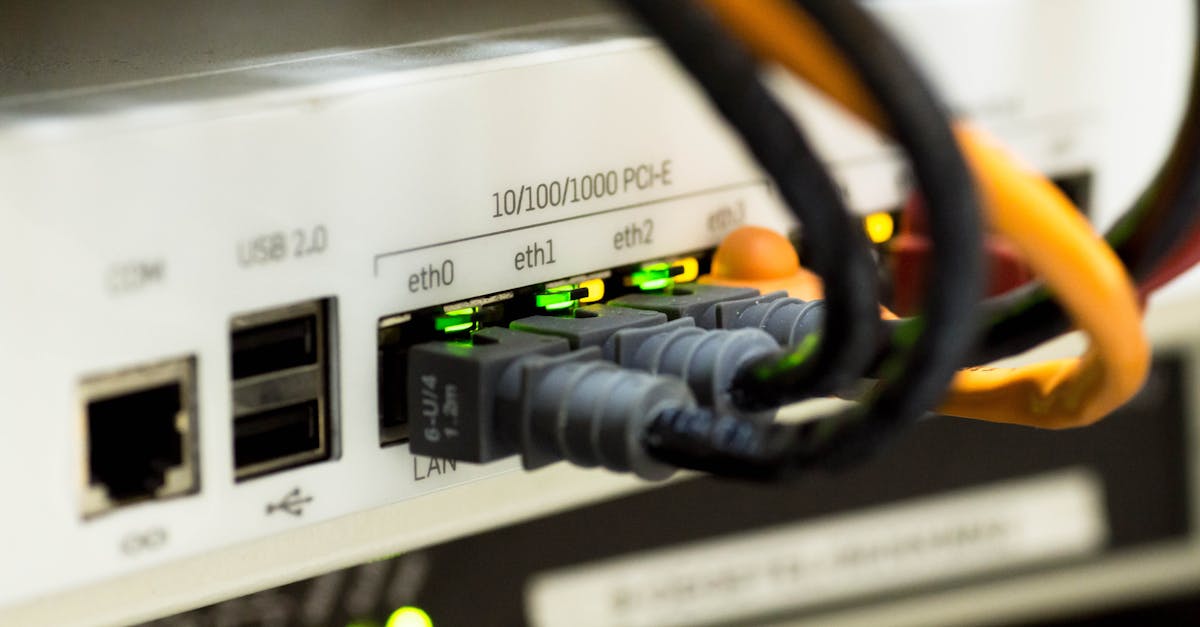
The Best 5G Home Internet Providers of 2026
Discover the top 5G home internet providers. Learn how 5G stacks up against fiber and cable for speed, reliability, and value at your home.
If you’re tired of being stuck with just one or two traditional internet providers, there’s a new player in town gaining serious momentum: 5G home internet. Using the same powerful fifth-generation cellular networks that connect the latest smartphones, companies like T-Mobile, Verizon, and AT&T are now beaming high-speed internet directly into homes. This technology offers a compelling alternative to cable and DSL, promising simple setup, competitive pricing, and freedom from the physical cables that have defined home internet for decades.
The appeal is clear: instead of waiting for a technician to drill holes and run wires, you get a box, plug it in, and connect to the internet. But is it the right choice for you? The answer depends on a crucial factor: availability. While the 5G footprint is expanding at an incredible pace, the quality and speed of service can vary dramatically from one block to the next. Choosing the best provider isn't just about picking the biggest name; it's about finding out who offers the strongest, most reliable signal at your exact address.
How Does 5G Home Internet Work?
At its core, 5G home internet works much like the internet on your phone, just supercharged for your entire home. Instead of a signal traveling through a physical fiber-optic or coaxial cable buried underground, it travels wirelessly through the air. A provider places a 5G gateway—a device that acts as both a modem and a Wi-Fi router—in your home. This gateway captures the 5G signal from a nearby cellular tower and converts it into a reliable Wi-Fi network for all your devices, from laptops and smart TVs to gaming consoles and security cameras.
This wireless 'last mile' delivery is the key differentiator. Traditional internet requires a physical line connecting your home to the provider's network, which is why installation can be complex and your choice of providers is limited by the infrastructure on your street. Because 5G home internet bypasses this requirement, it introduces much-needed competition into many areas. Setup is typically a do-it-yourself process that takes just a few minutes: find a good spot for the gateway (usually near a window), plug it in, and follow the steps on a smartphone app to get online.
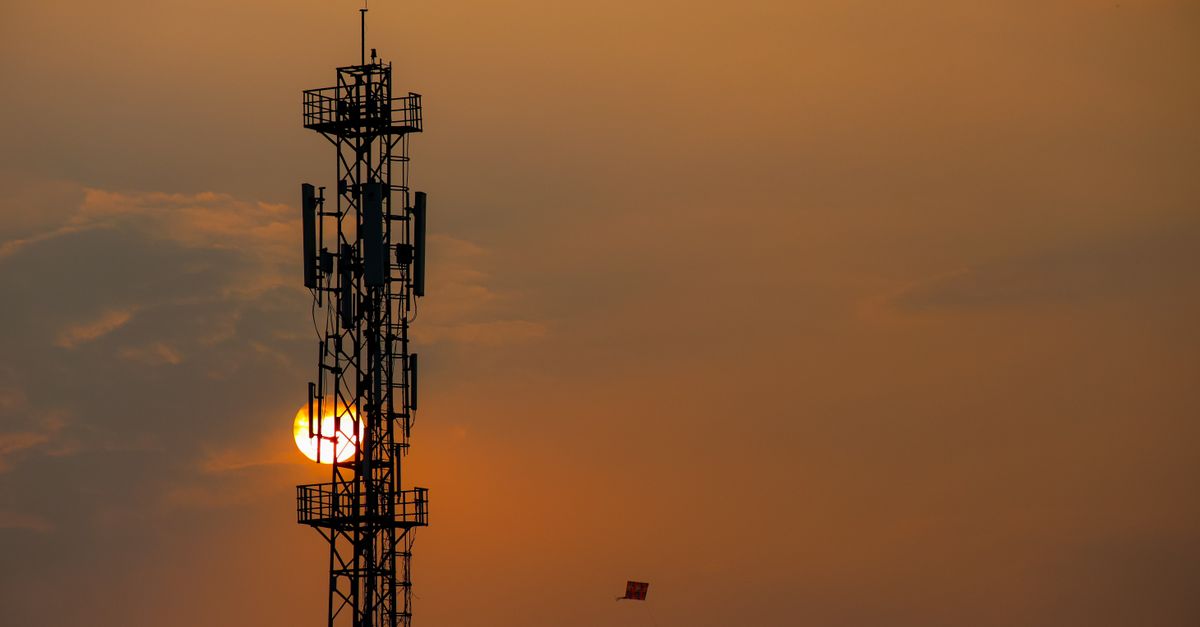
T-Mobile Home Internet: The Coverage Leader
T-Mobile was one of the first major carriers to go all-in on 5G home internet, and its early start has given it a significant advantage in network reach. Leveraging its extensive nationwide 5G network, T-Mobile Home Internet is available to tens of millions of households, including many in suburban and rural areas that have long been underserved by traditional broadband providers. If you've been stuck with slow DSL or costly satellite internet, T-Mobile might be the game-changing option you've been waiting for.
The company's approach is built on simplicity. They typically offer one or two straightforward plans with no data caps, no annual contracts, and all-in pricing that includes the gateway rental. This transparency is a refreshing change from the complex promotional rates and hidden fees common in the cable industry. Performance is generally solid, offering speeds suitable for streaming 4K video, working from home, and connecting a whole family of devices. However, because it's a wireless service, speeds can fluctuate based on your distance from the tower and local network congestion.
Verizon 5G Home Internet: The Speed Contender
While T-Mobile focused on broad coverage, Verizon has often emphasized raw speed with its 5G Home Internet service. The company operates two main types of 5G networks: its ultra-fast, high-frequency Ultra Wideband (mmWave) network and its more widespread C-Band and low-band 5G. If you're lucky enough to live in an area covered by its Ultra Wideband network, you can experience download speeds that rival or even exceed those of cable and some fiber plans, making it a powerful option for demanding users.
For homes outside the Ultra Wideband footprint, Verizon's service runs on its other 5G bands, which still deliver respectable broadband speeds that are a major upgrade over DSL. Like its competitors, Verizon's service is designed for easy self-installation and features simple, predictable pricing. They also offer significant monthly discounts to customers who bundle the service with a qualifying Verizon Wireless mobile plan, making it an extremely attractive value proposition for existing customers.
AT&T Internet Air: The Newcomer
AT&T is the latest of the big three to launch a widespread 5G home internet product, which it calls AT&T Internet Air. This service is a strategic part of AT&T's plan to deliver reliable broadband to customers who are beyond the reach of its expanding fiber network. Instead of leaving those customers on older, slower DSL connections, AT&T is now offering Internet Air as a modern, competitive alternative.
The service functions similarly to its rivals, with a self-install gateway that you set up yourself in minutes. The goal is to provide a consistent, reliable connection that's more than fast enough for the average household's streaming, browsing, and video conferencing needs. AT&T Internet Air is being rolled out systematically across the country, prioritizing areas where it can provide a meaningful upgrade over existing copper-based internet. As it expands, it will become an increasingly important option for consumers seeking more choice and better performance.
Pros and Cons of 5G Home Internet
Like any technology, 5G home internet has its own set of strengths and weaknesses. Understanding them is key to deciding if it's the right fit for your household. The advantages are significant and are driving its rapid adoption across the country. On the other hand, it's important to be aware of the potential trade-offs compared to a top-tier wired connection like fiber.
On the plus side, the simplicity is a huge selling point. The plug-and-play setup means no waiting for a technician. The pricing is often more transparent and affordable than cable, with fewer hidden fees and no annual contracts. For millions of people, it finally brings a viable, high-speed competitor to areas that previously had only one choice. However, the biggest drawback is consistency. Because it's a wireless service, performance can be affected by factors that don't impact a physical cable, such as network traffic, your distance from the cell tower, and even physical obstructions like hills or thick walls. While speeds can be very fast, they may not consistently hit the gigabit levels offered by the best fiber plans, and latency (or lag) can be slightly higher, which might be a concern for highly competitive online gamers.
- **Pros:** Simple self-installation, competitive and transparent pricing, no long-term contracts, brings new competition to many areas.
- **Cons:** Performance can be less consistent than fiber, speeds may fluctuate with network congestion, latency can be higher than wired connections.

Who is 5G Home Internet Best For?
So, who makes the ideal customer for 5G home internet? It's a fantastic solution for a wide range of people, but it truly shines for a few specific groups. First and foremost are those living in areas with limited broadband options. If your only choices have been a single cable company with rising prices or slow, unreliable DSL, 5G home internet can be a breath of fresh air, offering better performance and value.
It's also an excellent choice for renters or people who move frequently. The lack of a physical installation and long-term contracts means you can easily set it up in a new apartment and take it with you when you leave. Budget-conscious households also benefit from the straightforward, all-in pricing models. Finally, it's a great fit for the typical modern family whose internet usage revolves around streaming HD and 4K video, remote work and school, and general web browsing. For these common activities, 5G home internet provides more than enough speed and reliability.

How to Find the Best 5G Provider at Your Address
The single most important takeaway is that the 'best' 5G home internet provider is entirely dependent on your physical location. T-Mobile might offer the best performance on your street, while Verizon is stronger a few blocks over. Provider coverage maps on their websites offer a good starting point, but they are often just estimates. The only way to know for sure what's available and how it will perform is to check your specific address.
This is where the process can get tedious. You could spend an afternoon visiting the websites of T-Mobile, Verizon, and AT&T, entering your address into each one to see if you're eligible. Then you'd still need to check for cable or fiber providers like Xfinity, Spectrum, or AT&T Fiber to see how the 5G options stack up. A simpler approach is to use a service like KonnectX. In a single search, you can see every internet provider—whether it's 5G, fiber, cable, or satellite—that serves your exact address. This allows you to compare all your options side-by-side on one screen. Once you find the right plan, you can even order it over the phone at the same price as going to the provider directly, saving you time and hassle.

Key takeaways
- 5G home internet uses cellular networks to deliver broadband, offering a simple, cable-free alternative to traditional internet.
- The major providers are T-Mobile, Verizon, and AT&T, each with different network strengths and coverage areas.
- Key advantages include easy self-setup, competitive flat-rate pricing, and no long-term contracts or data caps.
- Performance can be less consistent than fiber and depends on your proximity to a cell tower and local network congestion.
- The best way to find a 5G provider is to check your specific address, as availability is highly localized.
FAQ
Is 5G home internet as good as fiber?
Fiber-optic internet is generally considered the gold standard for speed and reliability, offering symmetrical download and upload speeds and extremely low latency. While 5G home internet can be very fast, it typically cannot match the top-tier gigabit speeds and consistency of a direct fiber line. However, it is a powerful competitor to cable and a significant upgrade over DSL and satellite.
Can I use my own router with 5G home internet?
Yes, in most cases. Your provider will give you a 5G gateway device that receives the cellular signal and broadcasts a Wi-Fi network. This gateway will also have Ethernet ports, allowing you to connect your own Wi-Fi router or mesh system if you prefer.
Is 5G home internet good for gaming?
For casual gaming, 5G home internet is generally sufficient. However, for serious or competitive online gaming where every millisecond counts, latency (or 'ping') is critical. 5G latency is typically higher than that of fiber or cable connections, which could lead to a slight delay or lag. If you are a competitive gamer, a wired fiber or cable connection is likely the better choice.
Does weather affect 5G home internet?
Severe weather events like heavy rain, snow, or fog can theoretically interfere with any wireless signal, including 5G. However, the impact is usually minimal and temporary. Modern 5G networks are quite resilient, and you are unlikely to experience significant service disruptions due to normal weather conditions.
How much does 5G home internet cost?
Pricing is one of the most attractive features. Plans from major providers typically range from about $50 to $70 per month. Most also offer substantial discounts (often $10-$25 per month) if you have a qualifying mobile phone plan with them, which can make the final cost very competitive.
Is 5G home internet truly unlimited?
Yes, the home internet plans from major providers like T-Mobile, Verizon, and AT&T come with no hard data caps. You can stream, download, and browse as much as you want without worrying about overage fees, which is a major advantage over some satellite plans or using a mobile hotspot.
Do I need a technician to install 5G home internet?
No, and that's one of its biggest benefits. The service is designed for easy self-installation. Your provider ships you a gateway, and you simply plug it into power and follow the instructions on a smartphone app to position it for the best signal and get connected.