Find Every Fiber Internet Provider at Your Address: A Complete Guide
Searching for the fastest internet? This guide explains how to find every fiber optic provider available at your exact US address and choose the best plan.
Everyone wants fast, reliable internet, and in today's connected world, fiber optic service is the undisputed champion. It offers incredible speeds and rock-solid performance that other technologies struggle to match. However, finding it isn't as simple as choosing a provider you've heard of. Fiber availability is hyper-local, meaning your options can change from one house to the next on the same street. It all comes down to the physical infrastructure laid in the ground, making an exact address check the only way to know for sure what's available to you.
The core challenge is that provider websites will only show you their own plans, not the full picture of what you could get. You might spend hours checking different sites, only to miss a great local fiber provider you didn't know existed. This guide cuts through the confusion. We'll explain why fiber is different, how to perform a comprehensive search for every provider at your address, and what to do if fiber hasn't reached your neighborhood yet. With the right approach, you can easily compare all your options and make a confident choice, ensuring you get the best internet connection possible for your home.
Why Is Fiber Internet the Gold Standard?
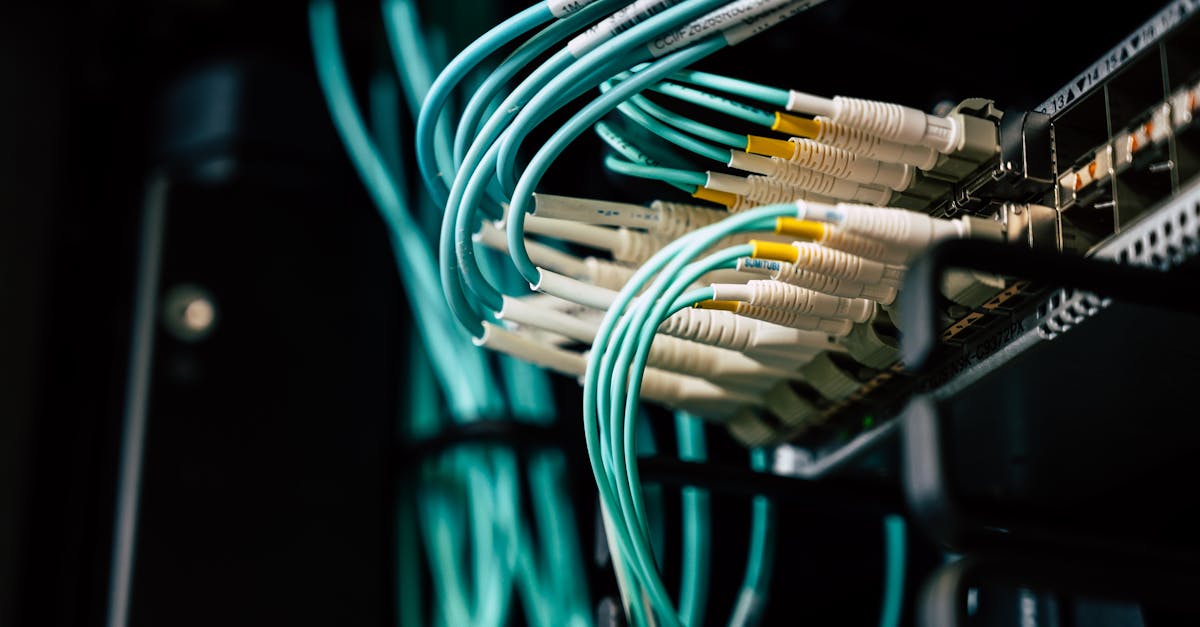
So what makes fiber optic internet so special? It boils down to the technology. Unlike cable or DSL internet, which transmit data as electrical signals over copper wires, fiber internet sends data as pulses of light through incredibly thin strands of glass. Light travels faster and is far less susceptible to interference than electricity, which translates directly into a superior internet experience. This fundamental difference is why fiber can deliver multi-gigabit speeds that were once unimaginable for home connections.
The most significant advantage for most users is symmetrical speeds, meaning your upload speed is just as fast as your download speed. While cable internet might offer fast downloads for streaming movies, its upload speeds are often a fraction of that, which can bottleneck video calls, online gaming, and uploading large files for work or school. Fiber's symmetrical performance eliminates this lag, creating a smoother, more responsive experience for everything you do online. It's not just faster for today; it's a future-proof technology built to handle the demands of tomorrow's applications.
The 'Last Mile' Problem: Why Availability Varies by Address
The reason you can't just get fiber anywhere is the immense cost and effort required to build the infrastructure. Laying the thousands of miles of fiber optic cable needed to connect a city is a massive undertaking for providers. They must dig trenches, run cables on utility poles, and secure local permits, all of which is expensive and time-consuming. Because of this, providers strategically build out their networks in phases, often prioritizing areas with higher population density where they can expect a faster return on their investment.
This leads to the 'last mile' problem. A provider might have a main fiber line running under a major road in your town, but that doesn't mean your home is connected. The 'last mile' refers to the final leg of the network that runs from that main line down individual streets and to each house. Your neighbor across the street could have access to AT&T Fiber or Verizon Fios, while your side of the street is still waiting for the connection. This is why a simple ZIP code search is often misleading; you must use your full street address to see the true availability at your front door.

Your Step-by-Step Guide to Finding Fiber Providers
There are two primary ways to uncover the fiber providers at your address. The first is the manual method: you make a list of all potential providers in your region and visit their websites one by one. For fiber, this would include national names like AT&T Fiber, Verizon Fios, Frontier, and Quantum Fiber (formerly CenturyLink Fiber), as well as more localized options like Google Fiber if you're in one of their cities. You'll need to enter your address into each of their availability checkers. While thorough, this process is repetitive and risks overlooking smaller regional fiber companies that might offer excellent service.
The second, more efficient method is to use a comprehensive comparison service. Tools like KonnectX are designed to solve this exact problem. You enter your address just once, and the platform instantly queries the databases of all major and many local providers serving your area. In seconds, you get a complete, unbiased list of every internet plan available—not just fiber, but also cable, 5G home internet, and satellite. This allows you to see all your options side-by-side, compare speeds and pricing accurately, and ensure you don't miss out on the best connection for your home. From there, you can even order over the phone at the same price offered by the provider, simplifying the entire process.
Who Are the Major Fiber Internet Providers?
In the United States, a few large companies dominate the fiber landscape, each with a distinct geographic footprint. AT&T Fiber has one of the largest networks, available in over 21 states and continually expanding into new metropolitan areas. Verizon Fios is a major player primarily concentrated in the Northeast, known for its high-quality network and service. Frontier Communications has been aggressively upgrading its old copper networks to fiber, bringing high-speed competition to many suburban and smaller communities across the country.
Beyond these giants, you have other key players. Quantum Fiber, the fiber-optic arm of Lumen (formerly CenturyLink), offers service in numerous states, focusing on delivering a straightforward, high-speed experience. In select cities, Google Fiber set a new standard for speed and pricing, pushing legacy providers to improve their offerings. It's also crucial to remember the dozens of regional and municipal fiber providers that deliver fantastic service to specific towns or counties. These are often the hidden gems that a manual search might miss but a powerful address-level search tool can uncover.
No Fiber? Here Are Your Next-Best Internet Options
After checking your address, you might discover that fiber hasn't arrived yet. Don't worry—you likely still have excellent high-speed options. For most Americans, the next-best alternative is cable internet. Providers like Xfinity, Spectrum, and Cox offer plans with download speeds that rival fiber, often exceeding 1 Gigabit per second (1,000 Mbps). This is more than enough for 4K streaming, online gaming, and a household full of connected devices. The primary trade-off is the asymmetrical speeds; your upload speeds will be significantly slower than your downloads, which can be a factor if you frequently upload large files or have multiple people on video calls.
Another powerful alternative that's expanding rapidly is 5G home internet. Services from companies like T-Mobile and Verizon use their robust cellular networks to deliver high-speed internet wirelessly to a dedicated router in your home. For many, especially those in areas with limited wired options, 5G home internet provides a compelling combination of speed, simple setup, and competitive pricing. In more remote or hard-to-wire locations, satellite internet from providers like Viasat or fixed wireless services can be a lifeline, providing essential connectivity where none existed before. A comprehensive availability check will show you all these technologies, allowing you to pick the best one for your situation.

Beyond the Speed: How to Compare Fiber Plans
Once you've confirmed which fiber providers are available, the next step is to choose the right plan. While it's tempting to just pick the fastest speed, it's important to match the plan to your household's actual needs. A 300-500 Mbps symmetrical plan is typically more than enough for a family that streams, games, and works from home. Gigabit plans (1,000 Mbps and up) are best for 'power users' with many smart home devices, those who frequently download massive files, or anyone who simply wants the absolute best performance without compromise.
Next, look carefully at the price. Most providers offer attractive introductory rates for the first 12 or 24 months. Be sure to find out what the price will be after that promotional period ends. One of the biggest perks of fiber is that most plans come with unlimited data, so you don't have to worry about data caps or overage fees. You should also clarify equipment costs. Does the monthly price include the Wi-Fi router, or is that an additional rental fee? Finally, check the contract terms. Many fiber providers now offer no-contract plans, giving you more flexibility.
Navigating these details across multiple providers can be tedious. A single call to a service like KonnectX can be invaluable here. An expert can walk you through the specifics of each available plan—the promo vs. regular pricing, equipment fees, and installation details—so you can easily compare apples to apples and make an informed decision without spending hours on the phone with different sales departments.

Key takeaways
- Fiber internet offers the fastest, most reliable connection with symmetrical upload and download speeds, ideal for modern online activities.
- Availability is determined by your exact street address, not your ZIP code, because of the high cost of building the 'last mile' of the network to individual homes.
- Use a comprehensive address-level search tool to see all available providers (fiber, cable, 5G) at once and avoid missing better options.
- When comparing fiber plans, consider the price after the promotional period ends, data caps (most have none), and equipment fees.
- If fiber is unavailable, high-speed cable and 5G home internet are excellent alternatives that provide gigabit-level download speeds for most homes.
FAQ
How do I know for sure if fiber is available at my address?
The only certain way is to check using your full street address. You can do this on individual provider websites or use a comprehensive comparison service like KonnectX, which checks multiple providers at once.
Is fiber internet worth the cost?
For most households, yes. The superior speed, reliability, and low latency significantly improve streaming, gaming, and remote work. Fiber plan prices are often very competitive with high-speed cable plans.
Can I get fiber internet in a rural area?
It is becoming more common as federal and local initiatives fund network expansion. Providers like Frontier are actively building fiber in less dense areas, but availability is still limited. An address check is the only way to know.
What is the main difference between fiber and cable internet?
Fiber uses light signals through glass strands, enabling faster, symmetrical speeds (equal upload and download). Cable uses electrical signals over coaxial cables, which typically results in much slower upload speeds.
Who is the best fiber internet provider?
There is no single 'best' provider for everyone. The best one for you is the one that offers the right combination of speed, price, and reliability at your specific address. Top providers include AT&T Fiber, Verizon Fios, and Frontier.
Do I need special equipment for fiber internet?
Yes. A technician will install an Optical Network Terminal (ONT) at your home to translate the light signal. You will then connect a Wi-Fi router to the ONT, which is usually provided by your internet company.
What does 'symmetrical speed' mean?
Symmetrical speed means your upload speed is the same as your download speed (e.g., 1,000 Mbps download and 1,000 Mbps upload). This is a key advantage of fiber, crucial for smooth video calls, online gaming, and uploading large files.
How can KonnectX help me find fiber internet?
KonnectX allows you to enter your address once to see every internet provider—fiber, cable, 5G, and more—available to you. You can compare all plans side-by-side and our team can help you order by phone, all at the same price as going directly to the provider.