How to Find Fiber Internet Providers at Your Address
Tired of slow internet? This guide explains how to find the fastest fiber internet providers available at your exact address and what your best options are.
Fiber internet is the gold standard for home connectivity. With promises of gigabit speeds, flawless 4K streaming, and lag-free gaming, it’s what everyone wants. The biggest challenge, however, isn't deciding if you want it—it's figuring out if you can even get it. You may have seen ads for AT&T Fiber or Verizon Fios in your city, but the reality of fiber availability is far more complex. It's a frustrating search that often leaves people wondering why the fastest internet seems to be everywhere and nowhere at the same time.
The truth is that fiber internet availability is hyper-local, coming down to your specific street address, not just your ZIP code or neighborhood. One side of the street might have access while the other doesn't. This is because deploying fiber requires installing brand-new physical infrastructure right to your doorstep. This guide will walk you through why your address is the single most important piece of information, how to perform a definitive check for all providers in your area, and what your best alternatives are if fiber hasn't reached you yet.
What Makes Fiber Internet So Fast?
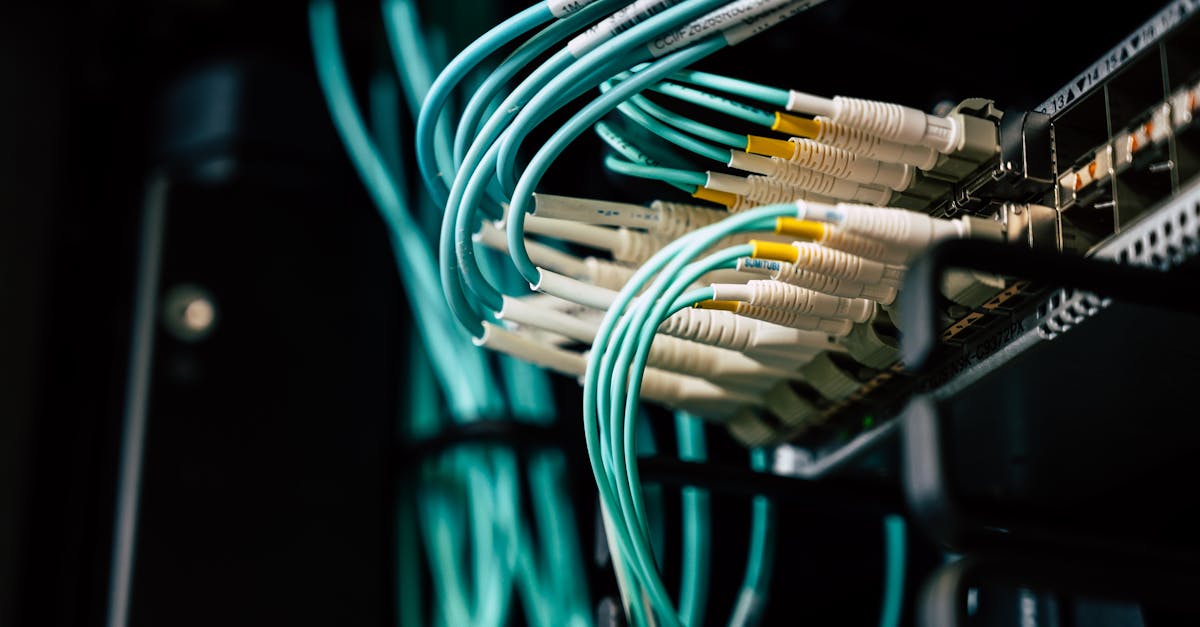
What makes fiber so much better than traditional internet connections like cable or DSL? The difference lies in the technology. Fiber-optic internet uses thin strands of glass to transmit data as pulses of light over long distances. This method is incredibly efficient and fast. In contrast, cable internet sends electrical signals over copper coaxial cables, and DSL uses old-fashioned telephone lines. While these technologies have improved over the years, they are fundamentally limited by the physics of sending data over metal wires.
This technological superiority translates into two key benefits: speed and reliability. Fiber networks can easily offer symmetrical speeds, meaning your upload speeds are just as fast as your download speeds. This is a game-changer for video calls, uploading large files for work, and online gaming. Light-based data transmission is also less susceptible to interference and signal degradation over distance, resulting in a more stable connection with lower latency (or lag). For a modern household juggling multiple streaming devices, smart home gadgets, and work-from-home demands, fiber provides the raw power and stability that other connections struggle to match.
Why Your Address Is the Key to Finding Fiber
The main reason you need your exact address to check for fiber is the immense cost and labor involved in building the network. Unlike cable or phone lines that have been in place for decades, fiber infrastructure is often built from scratch. A provider like Frontier or Google Fiber has to lay miles of primary fiber-optic cable along main roads, then branch off into individual neighborhoods. The final, most expensive step is running a dedicated line from the neighborhood hub directly to your home, a process known as "Fiber to the Home" (FTTH).
This block-by-block, house-by-house rollout means that availability is a patchwork quilt. A provider might wire one subdivision but skip the one next to it due to cost, local regulations, or existing utility infrastructure. Your neighbor across the street might have access because their home is connected to a different utility pole or underground conduit that has been upgraded. This is why simply knowing your ZIP code is useless for determining fiber availability. Providers' internal systems are mapped to specific addresses to know for certain if the final connection to your home has been built and is ready for service.

The Best Way to Check for Fiber Providers
The most common approach people take is visiting the websites of major providers like AT&T, Verizon, and Xfinity one by one and typing in their address. While this works, it’s inefficient and you risk getting an incomplete picture. You might check the big national names and assume fiber isn't available, completely missing a smaller regional fiber company or a local electric co-op that has recently built out a network in your area. Keeping track of which providers you've checked and what plans they offer can quickly become a confusing chore.
A far more effective method is to use a comprehensive provider comparison service. Tools like KonnectX are designed to solve this exact problem. Instead of you going to each provider, these platforms query the availability databases of every major and many minor internet service providers (ISPs) simultaneously. By entering your address just once, you get a complete, unbiased list of every internet plan—fiber, cable, 5G home internet, and satellite—available at your specific location. This not only saves a significant amount of time but also ensures you see all your options, giving you the power to choose the best technology and price for your needs.
The process is simple. You provide your street address, and the service instantly shows you a list of providers, the speeds they offer, and their current pricing. This allows you to compare a 1 Gbps fiber plan from AT&T directly against a 1 Gbps cable plan from Spectrum, or see if T-Mobile's 5G Home Internet is a viable alternative. It cuts through the marketing and gives you a clear, actionable comparison of your real-world choices.
Who Are the Major Fiber Internet Providers?
The fiber landscape in the United States is dominated by a few large players but also includes a growing number of regional and municipal providers. AT&T Fiber is one of the most extensive networks, with a major presence across 21 states, primarily in the South, Midwest, and California. Verizon Fios is another giant, but its footprint is concentrated heavily in the Northeast, serving major metropolitan areas from Massachusetts to Virginia. Frontier Communications has also been aggressively upgrading its old copper networks to fiber, now offering multi-gigabit speeds in many of the states it serves.
Beyond these titans, you'll find other significant providers. Google Fiber, while not as widespread, offers incredible speeds in a select number of cities. CenturyLink is rebranding its fiber service as Quantum Fiber and expanding its reach. Critically, there is a surge in smaller, highly competitive fiber providers. These can be municipal projects funded by a city, or private companies focused on bringing fiber to underserved towns and suburbs. Because they aren't household names, these providers are often the ones people miss when checking for service, which is why using a comprehensive search tool is so important.
No Fiber? Here Are Your Next-Best Options
Finding out fiber isn't available at your address can be disappointing, but it doesn't mean you're stuck with slow internet. Today, there are excellent high-speed alternatives. For most people, the next-best option is cable internet. Providers like Xfinity, Spectrum, and Cox offer plans with download speeds that rival fiber, often exceeding 1 Gbps. Cable is perfectly capable of handling 4K streaming, online gaming, and a house full of connected devices. The primary drawback is upload speed, which is typically only a fraction of the download speed. However, for most users' daily activities, this isn't a significant issue.
Another powerful alternative that has emerged is 5G home internet. Services from providers like T-Mobile and Verizon use their vast cellular networks to deliver broadband speeds wirelessly to a dedicated receiver in your home. Setup is often as simple as plugging in a box, with no technician required. Speeds can be very competitive with mid-tier cable and fiber plans, and pricing is often straightforward with no data caps. Performance can vary more than with a wired connection, as it depends on your proximity to a cell tower and network congestion, but for many homes, it's a fantastic and flexible option.
If you live in a rural area beyond the reach of both cable and 5G networks, satellite internet from providers like Viasat or HughesNet may be your primary option. While historically known for high latency and strict data limits, newer satellite technology is improving performance. It remains a solution for those with no other choice, but it can provide essential connectivity for remote work, learning, and entertainment where it was previously impossible.

I Found a Fiber Plan—What Happens Next?
Once you've used an availability tool, compared your options, and selected the perfect fiber plan, the next step is placing the order. This is another area where a service like KonnectX can simplify things. Instead of navigating a provider's website or call center, you can often complete the entire process in a single phone call. An expert can verify the plan details, confirm the price—which is the exact same as going directly to the provider—and schedule your installation appointment. There's no extra cost for this service; it's designed to save you time and hassle.
Fiber installation is more hands-on than setting up cable or 5G internet. Because it involves a new physical connection, a technician must visit your home. They will run a durable fiber-optic cable from a nearby utility pole or underground terminal to the outside of your house. From there, they drill a small hole to bring the line inside and connect it to a device called an Optical Network Terminal (ONT). The ONT is what converts the light signals into an Ethernet connection for your Wi-Fi router. You will need to be home for this appointment, which typically takes a few hours, but the result is a brand-new, cutting-edge connection built for modern internet demands.

Key takeaways
- Fiber internet offers superior symmetrical speeds and reliability, making it the best connection type for modern homes.
- Availability is hyper-local and must be confirmed using your exact street address, as service can vary from one house to the next.
- Using a comprehensive comparison tool like KonnectX is the most efficient way to see every provider—fiber, cable, and 5G—at your address.
- If fiber is not yet available, high-speed cable and 5G home internet are excellent alternatives that meet the needs of most users.
- Ordering through a service like KonnectX can streamline the setup process at the same price as going directly to the provider.
FAQ
How do I know for sure if I can get fiber in my area?
The only definitive way to know is to check your specific address. You can do this on individual provider websites or use a comprehensive comparison tool that checks all providers serving your address at once.
Is fiber internet worth the cost?
For most households, yes. Fiber plans are often priced competitively with high-end cable internet but provide significantly better performance, especially symmetrical upload speeds, which are crucial for video calls, gaming, and working from home.
Why can my neighbor get fiber but I can't?
This is common and usually happens because your homes are served by different parts of the utility infrastructure. The provider's fiber lines may run to their utility pole or connection point but not yet to yours.
What's the difference between fiber and cable internet?
Fiber transmits data as light through glass strands, enabling faster, symmetrical upload and download speeds. Cable uses electrical signals over copper wires, which typically results in much slower upload speeds.
Can I install fiber internet myself?
No, professional installation by a technician is required. They need to run a new physical fiber optic line to your home and install an Optical Network Terminal (ONT) to get your service running.
What is the fastest fiber internet provider?
Several providers, including AT&T, Google Fiber, Frontier, and Quantum Fiber, offer multi-gigabit plans up to 5 Gbps or even higher in some areas. The fastest provider for you is the one offering the top-tier plan at your specific address.
Will having fiber internet access increase my home's value?
While it might not directly increase the appraised value, access to high-speed fiber is a very strong selling point for potential buyers and renters, making your property more desirable on the market.