Who Has Fiber Optic Internet in My Area?
Curious about fiber optic internet? Learn which major providers offer it, how to check availability at your address, and what to expect for speeds and pricing.
The easiest way to find fiber optic internet providers near you is to use an online availability checker that compares all options at your exact address. The largest fiber providers in the United States include AT&T Fiber, Verizon Fios, and Frontier, but dozens of regional and local companies are also rapidly expanding their high-speed networks, making availability more common than ever.
Unlike cable or DSL, fiber internet sends data as pulses of light through glass strands, resulting in incredibly fast, reliable connections with symmetrical speeds—meaning your uploads are just as fast as your downloads. This technology is the gold standard for home internet, but its biggest limitation is access. Because it requires all-new infrastructure, availability can vary from one neighborhood to the next. Finding out if those next-generation speeds have reached your home is the first and most important step.
Who are the biggest fiber internet providers in the US?
The largest fiber internet providers in the United States include national names like AT&T Fiber, Verizon Fios, and Frontier, alongside rapidly expanding regional providers such as Google Fiber, CenturyLink's Quantum Fiber, and EarthLink. While cable providers like Xfinity and Spectrum are dominant in many areas, the fiber footprint is growing daily, often with multiple providers competing in the same city.
Each provider has a different geographic focus. AT&T Fiber has a massive presence across the South, Midwest, and California. Verizon Fios is concentrated in major metropolitan areas in the Northeast. Frontier has made significant investments in expanding its fiber network in both urban and suburban communities across more than 25 states. Meanwhile, dozens of smaller, local fiber companies are bringing gigabit speeds to communities that were previously underserved. The key is knowing which of these operates on your street.
How can I check for fiber availability at my address?
The most reliable way to check for fiber availability is to use a comprehensive search tool that allows you to enter your street address and see a complete list of every internet service provider—including fiber, cable, and 5G home internet—available to you. While you can visit individual provider websites one by one, an aggregator tool saves significant time and ensures you don't miss a local or regional option.
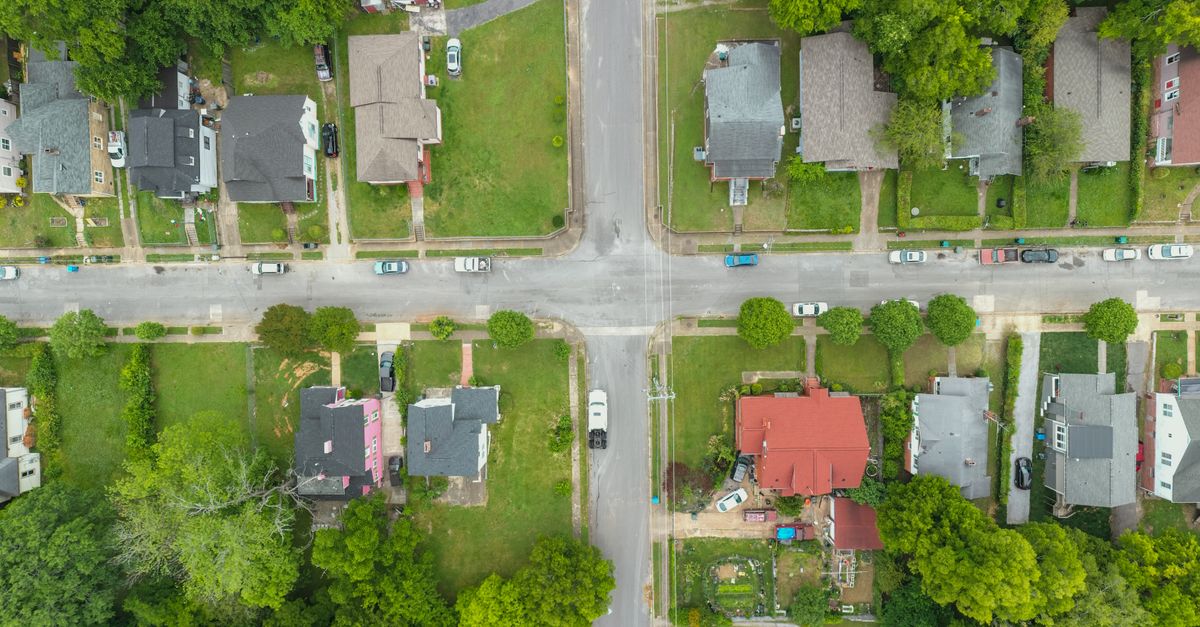
Internet availability is hyper-local, coming down to the wiring on your specific street. That's why simply searching for "internet providers in my city" isn't enough. An address-level check is the only way to confirm which companies have run the necessary fiber optic lines to your home. Using a service like KonnectX allows you to check what's available at your address in one simple step, giving you a full picture of your options and letting you compare plans side-by-side.
What makes fiber optic internet different from cable?
Fiber optic internet is fundamentally different from cable because it transmits data using light signals through glass strands, enabling symmetrical upload and download speeds and greater reliability, whereas cable uses older copper coaxial lines originally designed for TV. This technological difference is why fiber can offer performance that cable internet simply can't match, especially when it comes to upload speeds.
The most significant advantage is symmetry. A gigabit fiber plan typically delivers 1,000 Mbps download and 1,000 Mbps upload speeds. A comparable gigabit cable internet plan might offer 1,000 Mbps download but only 35-50 Mbps upload. This matters immensely for video conferencing, uploading large files, online gaming, and live streaming. Furthermore, fiber connections are dedicated to your home, meaning you won't experience the same network congestion and slowdowns during peak evening hours that can affect shared cable networks in a neighborhood.
| Feature | Fiber Optic Internet | Cable Internet |
|---|---|---|
| Technology | Light over glass fiber strands | Electricity over copper coaxial cables |
| Upload Speed | Symmetrical (same as download) | Asymmetrical (much slower than download) |
| Reliability | Excellent; less signal degradation | Good; can slow down during peak hours |
| Availability | Limited but growing rapidly | Widely available |

How much does fiber internet typically cost?
Fiber internet plans typically range from about $50 to over $100 per month, with prices depending on the speed you choose, promotional offers, and whether equipment rental fees are included. Most providers offer several speed tiers, allowing you to select a plan that fits both your budget and your household's needs.
Entry-level fiber plans often start around 300 Mbps or 500 Mbps, which is more than enough for most families and usually costs between $50 and $60 per month. The most popular option is often the gigabit plan (around 1,000 Mbps), which typically falls in the $70 to $90 range. Some providers also offer multi-gig plans (2,000 to 5,000 Mbps) for power users, which can exceed $100 per month. Many fiber providers, like AT&T Fiber and Verizon Fios, now include the Wi-Fi router at no extra cost and offer no-contract plans, which adds significant value. Always check for introductory internet deals, but also be sure to ask what the price will be after the promotional period ends.

Is it worth switching to fiber if it becomes available?
For most households, switching to fiber internet is absolutely worth it due to its superior speed, reliability, and symmetrical uploads, especially for homes with multiple users, streamers, gamers, or remote workers. If your daily online activities involve more than just simple web browsing and email, the performance boost from fiber is immediately noticeable.
Consider your household's usage. Do multiple people stream 4K video, play online games, and participate in video calls at the same time? Fiber eliminates buffering and lag in these scenarios. If you work from home, the fast upload speeds make sending large files, backing up data to the cloud, and hosting video conferences seamless. While a single person with minimal internet needs might be fine with a basic cable plan, fiber is a future-proof investment that ensures your home connection can handle the increasing demands of modern smart homes and entertainment for years to come.

What is the process for getting fiber internet installed?
Getting fiber internet installed typically involves a technician running a new fiber optic line from a nearby utility pole or underground terminal to your home, installing a small box called an Optical Network Terminal (ONT) inside, and then connecting your Wi-Fi router to it. Unlike a cable or DSL setup that uses existing phone or TV lines, fiber requires this new, dedicated connection.
The process begins after you place your order. You'll schedule an appointment, and a technician will handle the entire physical installation, which usually takes two to four hours. They will determine the best path for the thin fiber cable to enter your home, which may require minor drilling through an exterior wall. The ONT, which converts the light signals into an Ethernet connection, is usually installed in a garage, basement, or utility closet. Once it's all connected, the technician will activate your service and ensure your Wi-Fi is up and running before they leave.

Ready to See Your Fiber Options?
Finding out if you can get the best internet technology starts with a simple search. Fiber offers a transformative upgrade in speed and reliability that can support any connected home's needs, from 4K streaming and competitive gaming to a fully remote office.
The best way to know for sure is to check availability at your address. In seconds, you can see every fiber, cable, 5G, and satellite plan available to you. If you'd rather talk it through, call KonnectX. Our experts can compare all the providers in your area and help you order right over the phone—at the same price as going directly to the provider, with no extra fees.
Key takeaways
- Fiber internet uses light signals over glass strands, offering symmetrical upload/download speeds and superior reliability compared to cable.
- Major national fiber providers include AT&T Fiber, Verizon Fios, and Frontier, but dozens of regional providers are also expanding.
- Availability is hyper-local and must be confirmed at your specific street address, as it can vary from one neighborhood to the next.
- Fiber plan pricing typically ranges from $50 for entry-level speeds (300-500 Mbps) to $100+ for multi-gigabit speeds.
- Professional installation is required to run a new fiber optic line to your home and install an Optical Network Terminal (ONT).
FAQ
Can I use my own router with fiber internet?
Yes, in most cases you can use your own router with fiber internet. The provider will install an Optical Network Terminal (ONT) at your home, which you can then connect your personal router to via an Ethernet cable.
Is fiber internet better for gaming?
Yes, fiber internet is significantly better for gaming. Its low latency (or 'ping') and high, symmetrical speeds result in a stable, lag-free connection, which is crucial for competitive online gaming.
How fast is fiber optic internet?
Fiber optic internet plans commonly start at 300 to 500 Mbps and go up to 1,000 Mbps (1 Gbps), 2,000 Mbps (2 Gbps), and even 5,000 Mbps (5 Gbps) in many areas, making it the fastest residential internet technology available.
What does 'symmetrical speeds' mean?
Symmetrical speeds mean your upload speed is the same as your download speed. For example, a 1,000 Mbps symmetrical plan gives you 1,000 Mbps for downloading and 1,000 Mbps for uploading, which is ideal for video calls, uploading large files, and live streaming.
Is fiber the same as Wi-Fi?
No. Fiber is the technology that brings the internet into your home through a physical cable. Wi-Fi is the technology that creates a wireless network inside your home, allowing your devices to connect to that internet signal without wires.
Does fiber internet go out when the power does?
Yes, your fiber internet service will go out during a power outage. The equipment that runs it, including the Optical Network Terminal (ONT) and your Wi-Fi router, requires electricity to function.
Do I need professional installation for fiber?
Yes, fiber internet almost always requires a professional installation. A technician needs to run a new fiber optic cable from the street to your house and install an ONT, which is not something a user can do themselves.