How to Find Gigabit Internet Near You: A Complete Guide
Looking for gigabit internet? Learn what it is, who offers it, and how to instantly check every provider available at your exact address.
You’ve probably heard the term 'gigabit internet' and wondered if it’s something you need. In a world where our homes are becoming smarter and our entertainment is streamed in ultra-high definition, a fast and reliable internet connection is no longer a luxury—it's essential. Gigabit internet, with its lightning-fast speeds of 1,000 megabits per second (Mbps), represents the gold standard of home connectivity. It's a significant leap from the average internet speeds of just a few years ago, capable of handling the demands of even the most connected households without breaking a sweat.
But what does that speed actually mean for you, and more importantly, can you even get it at your address? Availability for these top-tier plans is the biggest hurdle for most people. The infrastructure required, most often fiber-optic lines, isn't built out everywhere. This guide will walk you through what gigabit internet is, who it’s for, which providers offer it, and the simplest way to find out if it’s available in your neighborhood. Understanding your options is the first step toward securing a connection that won't just meet your needs today, but will be ready for the digital demands of tomorrow.
What is Gigabit Internet, Really?
So, what exactly is gigabit internet? The term refers to an internet connection with a download speed of 1 gigabit per second (Gbps), which is equal to 1,000 megabits per second (Mbps). To put that into perspective, it's about 10 to 20 times faster than the average broadband speed in the United States. While your current connection might take several minutes to download a high-definition movie, a gigabit connection can do it in under a minute, sometimes in just a few seconds.
The benefits go far beyond just one fast download. A gigabit connection provides massive bandwidth, which is like having a multi-lane superhighway for your data. This means multiple people can be streaming 4K video, playing competitive online games, video conferencing, and backing up large files to the cloud simultaneously, all without causing slowdowns or buffering for anyone else. One of the key features of gigabit plans, especially those on a fiber-optic network, is 'symmetrical speeds.' This means your upload speed is just as fast as your download speed. For content creators, remote workers who handle large files, or anyone who frequently uses video calls, fast upload speeds are a game-changer.
This level of performance transforms your online experience. Web pages load instantly, software updates complete in a flash, and the frustrating lag that can plague online gaming becomes a thing of the past. It’s about creating a seamless, powerful, and frustration-free digital environment for your entire home.

Who Actually Needs Gigabit Speeds?
With all that power, a common question is: 'Do I actually need gigabit speeds?' For some, it might be overkill, but for a growing number of households, it’s becoming a necessity. The easiest way to decide is to consider how many people and devices are using your internet connection at the same time. If you have a large family or multiple roommates all with their own smartphones, laptops, smart TVs, and gaming consoles, your bandwidth needs add up quickly.
Consider these common scenarios where gigabit internet truly shines. For the serious online gamer, the ultra-low latency (or 'ping') of a fiber gigabit connection provides a critical competitive edge, while fast downloads mean you can install a new 100 GB game in minutes, not hours. For remote workers and students, it means flawless video conferences and the ability to upload and download massive project files without delay. In a home full of streamers, a gigabit plan ensures one person’s 4K movie binge doesn't interrupt another's live sports stream. It also future-proofs your home for emerging technologies like 8K streaming, virtual reality, and an ever-expanding ecosystem of smart home devices that all rely on a stable, high-capacity connection.
Ultimately, if you find your current internet service struggling to keep up—with constant buffering, slow downloads, or dropped video calls—upgrading to a gigabit plan is the most effective solution. It eliminates your internet connection as the bottleneck, providing more than enough capacity for today's needs and whatever comes next.

The Technology Behind Gigabit Internet: Fiber vs. Cable
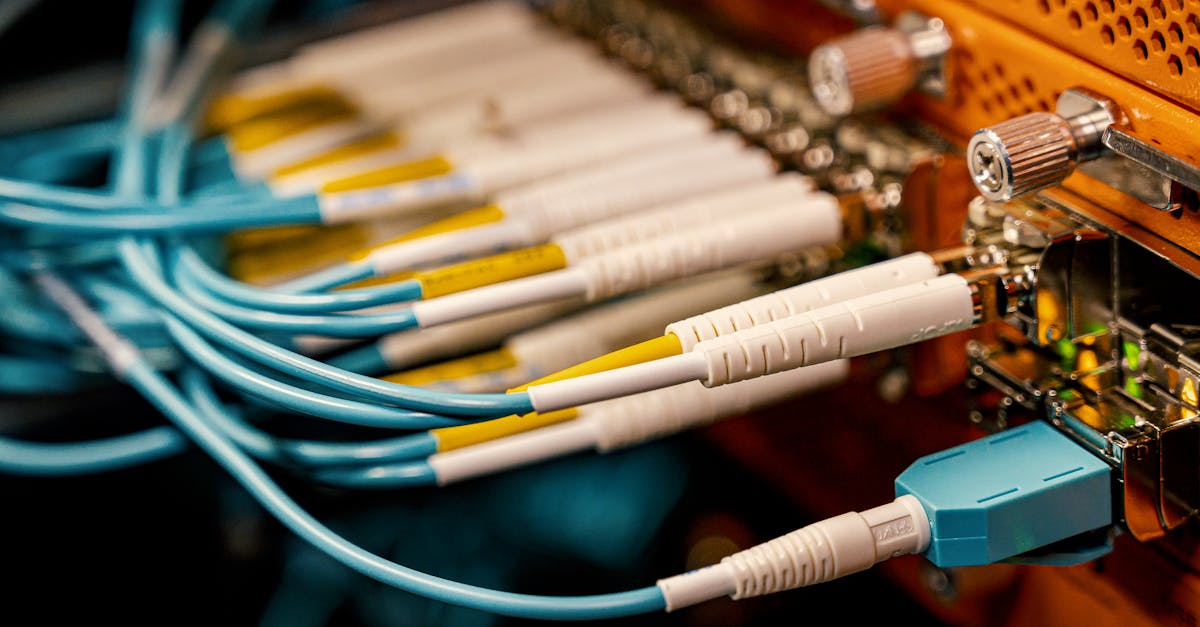
The magic of gigabit internet is delivered primarily through fiber-optic technology. Fiber networks use thin strands of glass to transmit data as pulses of light over long distances, resulting in incredibly high speeds, reliability, and capacity. Because data travels at the speed of light, fiber connections are less susceptible to interference and signal degradation compared to older technologies. This is why fiber is the only technology that can consistently deliver symmetrical gigabit speeds, where your upload performance matches your download performance.
However, fiber isn't the only path to gigabit speeds. Many major cable internet providers have upgraded their existing coaxial cable networks (the same kind that delivers cable TV) to offer gigabit-tier download speeds. Companies like Xfinity and Spectrum use a technology called DOCSIS (Data Over Cable Service Interface Specification) to push faster speeds over their infrastructure. While these plans can provide excellent download performance, their upload speeds are typically much lower than their fiber counterparts. For most users who primarily consume content, this is perfectly fine. But for those who upload large files or need the best video conferencing quality, the symmetrical speeds of fiber remain the top choice.
It's worth noting that while other technologies like 5G home internet are rapidly improving, they generally don't offer the same consistent gigabit performance and low latency as a wired fiber or cable connection yet. For true gigabit service you can count on, fiber and cable are the leading options today.
Major Providers Offering Gigabit Internet Plans
The good news is that gigabit internet is more widely available than ever before, with numerous national and regional providers expanding their high-speed networks. The largest fiber providers in the U.S. include names like AT&T Fiber, Verizon Fios, and Frontier, who have been aggressively building out their fiber-optic footprints in metropolitan and suburban areas across the country.
In the cable space, industry giants like Xfinity from Comcast and Spectrum from Charter Communications offer gigabit download speeds to a massive portion of the country. Because they are leveraging their extensive existing cable networks, their gigabit plans are often available in areas where fiber has not yet been built. Other providers like EarthLink also offer gigabit plans, often by using the network infrastructure of other major carriers.
The most important thing to remember is that availability is not determined by a provider's general service area, but by the specific infrastructure wired to your exact address. A provider might offer service in your city, but their gigabit fiber plan may only be available a few blocks away. This patchwork of availability is why simply searching for a provider's name isn't enough; you have to check your specific location to know for sure what's available to you.
How to Find Gigabit Internet at Your Specific Address
This brings us to the central challenge: how do you find out if you can get gigabit internet at your home? The traditional method is a tedious process. You have to visit the website of every potential provider—AT&T, Xfinity, Verizon, Spectrum, and so on—and type in your address on each one, just to see if they serve you and what plans they offer. You might spend an hour or more cross-referencing different browser tabs, trying to compare plans, pricing, and contract terms. It's inefficient and easy to miss a great option from a smaller regional provider you didn't even know existed.
This is precisely the problem KonnectX was built to solve. Instead of you having to hunt down the providers, we bring all the information to you. By entering your address just once on our site, you can see a complete, unbiased list of every internet provider—from major national carriers to local specialists—available at your home. Our tool checks for fiber, cable, 5G, and satellite options, clearly showing you which ones offer gigabit speeds.
You can easily compare plans, prices, and speeds side-by-side to find the best fit for your needs and budget. Once you've made a decision, you can order your new service in a single phone call. We offer the exact same plans and pricing as the providers themselves, so there's no extra cost to you. It's the simplest, most comprehensive way to find and switch to the best internet connection available, including the gigabit plan you've been looking for.
Understanding the True Cost and Value of Gigabit Internet
While gigabit internet is a premium service, its cost has become increasingly competitive over the years. In many markets, you may find that a 1,000 Mbps plan is only moderately more expensive than a 300 or 500 Mbps plan, especially with introductory promotional pricing. When you consider the massive leap in performance and the ability to support a growing number of devices, the value proposition is often very compelling.
When comparing prices, be sure to look beyond the monthly sticker price. Ask about equipment costs—does the plan include a modem and router, or is there a monthly rental fee? Check for data caps, although they are thankfully rare on most gigabit fiber plans. Also, inquire about the price after the initial promotional period ends, so you know what to expect for your budget long-term. Finally, remember that taxes and fees will add a small amount to your final bill.
Think of a gigabit plan not just as an expense, but as an investment in your home's digital infrastructure. It provides a robust foundation that will effortlessly handle your connectivity needs for years to come, even as technology evolves and data demands increase. For a busy, modern household, the cost is often easily justified by the elimination of daily digital frustrations.
Getting Your Home Ready for Gigabit Speeds
Signing up for gigabit internet is the first step, but to truly experience those speeds throughout your home, your own equipment needs to be up to the task. The connection from your provider is only as good as the network inside your house, and the most common bottleneck is an outdated Wi-Fi router.
To make the most of a 1,000 Mbps connection, you'll want a router that supports modern Wi-Fi standards, ideally Wi-Fi 6 (802.11ax) or Wi-Fi 6E. These newer standards are designed to handle higher speeds and manage traffic from many devices more efficiently than older generations like Wi-Fi 5 (802.11ac). Many providers will offer a compatible router for rent, but purchasing your own can sometimes be a better long-term value and offer more advanced features.
It's also important to understand that Wi-Fi speeds will almost always be lower than your plan's maximum speed due to factors like distance from the router, physical obstructions like walls, and radio interference. For activities that demand the absolute highest speed and lowest latency, such as competitive gaming or downloading enormous files, a wired Ethernet connection directly from your router to your device is always the best option. Finally, remember that your devices themselves have speed limits; a 5-year-old laptop or smartphone simply may not have the hardware to process full gigabit speeds, even with a perfect connection.

Key takeaways
- Gigabit internet provides speeds of 1,000 Mbps, making it ideal for large households, gamers, 4K/8K streamers, and remote workers.
- Fiber-optic is the best technology for gigabit speeds, offering equal download and upload speeds, though some cable providers also offer gigabit download plans.
- Availability is highly specific to your address. A provider may be in your city but not on your street.
- The easiest way to check for service is to use a comparison tool like KonnectX, which shows every provider and plan at your address in one search.
- To get the full benefit of gigabit speeds, you need a modern Wi-Fi 6 or 6E router and up-to-date devices.
FAQ
What does 1 gigabit internet mean?
1 gigabit internet, or 1 Gbps, means the connection can download data at a speed of 1,000 megabits per second (Mbps). This is fast enough to download a full HD movie in under a minute.
Is gigabit internet the same as fiber internet?
Not always, but they are closely related. Fiber-optic technology is the most common and effective way to deliver gigabit speeds, especially symmetrical ones. However, some cable companies can also offer 1,000 Mbps download speeds over their existing networks.
Do I really need 1 gigabit internet?
It depends on your usage. If you live in a household with many people and devices all using the internet at once for things like 4K streaming, online gaming, and video calls, a gigabit plan can prevent slowdowns and buffering. It's also great for future-proofing your home.
Why am I not getting gigabit speeds on my Wi-Fi test?
Several factors can prevent you from seeing full gigabit speeds over Wi-Fi. These include an older router, the capabilities of your device (phone/laptop), distance from the router, and physical obstructions. For a true speed test, use a wired Ethernet connection to a modern computer.
Is gigabit internet worth the money?
For many modern households, it is. The price for gigabit plans has become more competitive, and the performance boost can eliminate common frustrations with slow internet, making it a valuable upgrade for a connected home.
How can I check if gigabit internet is available for me?
The best way is to use an address-based comparison service like KonnectX. You enter your address once to see every internet plan, including gigabit options from all providers that serve your specific location.
What's the difference between megabits (Mbps) and gigabits (Gbps)?
They are units of data speed. A gigabit is much larger than a megabit. There are 1,000 megabits in 1 gigabit. So, a 1 Gbps connection is ten times faster than a 100 Mbps connection.
Will gigabit internet eliminate all buffering?
It will eliminate your home's internet connection as the cause of buffering. However, buffering can still occur due to issues with the streaming service's servers, an overloaded Wi-Fi network, or an underpowered streaming device.