
Gigabit Internet Reviews: Is a 1 Gig Plan Worth It?
Wondering if gigabit internet is worth the upgrade? Our guide decodes the reviews, explains who truly needs 1 Gig speeds, and helps you find the best plan.
Gigabit internet has quickly become the new benchmark for premium home internet service. With advertised speeds of 1,000 megabits per second (Mbps), it promises a future-proof connection capable of handling anything you throw at it. But as these plans become more widely available from providers like AT&T Fiber, Verizon Fios, and Xfinity, a key question emerges: is it all marketing hype, or is a gigabit plan a genuine necessity for the modern connected home? Reading reviews can be a dizzying experience, filled with technical jargon and conflicting reports. This guide will help you cut through the noise.
We'll break down what gigabit internet really is, who actually benefits from these ultra-fast speeds, and what to look for in user reviews to get the real story. The truth is, the "best" gigabit plan isn't a one-size-fits-all solution. It depends entirely on which providers serve your specific address, the technology they use, and your household's unique needs. Understanding these factors is the first step to making an informed decision, and a comparison service like KonnectX can show you every option available—from fiber to cable to 5G—so you can find the perfect fit without the guesswork.
What Exactly Is Gigabit Internet?
So, what does "gigabit internet" actually mean? In simple terms, it refers to an internet connection with a maximum theoretical speed of 1 gigabit per second (Gbps), which is the same as 1,000 Mbps. To put that in perspective, this is significantly faster than the average internet plan in the U.S. It’s the difference between downloading a high-definition movie in a few minutes versus a few seconds. This level of speed ensures that your internet connection is almost never the bottleneck, whether you're streaming, gaming, or working from home.
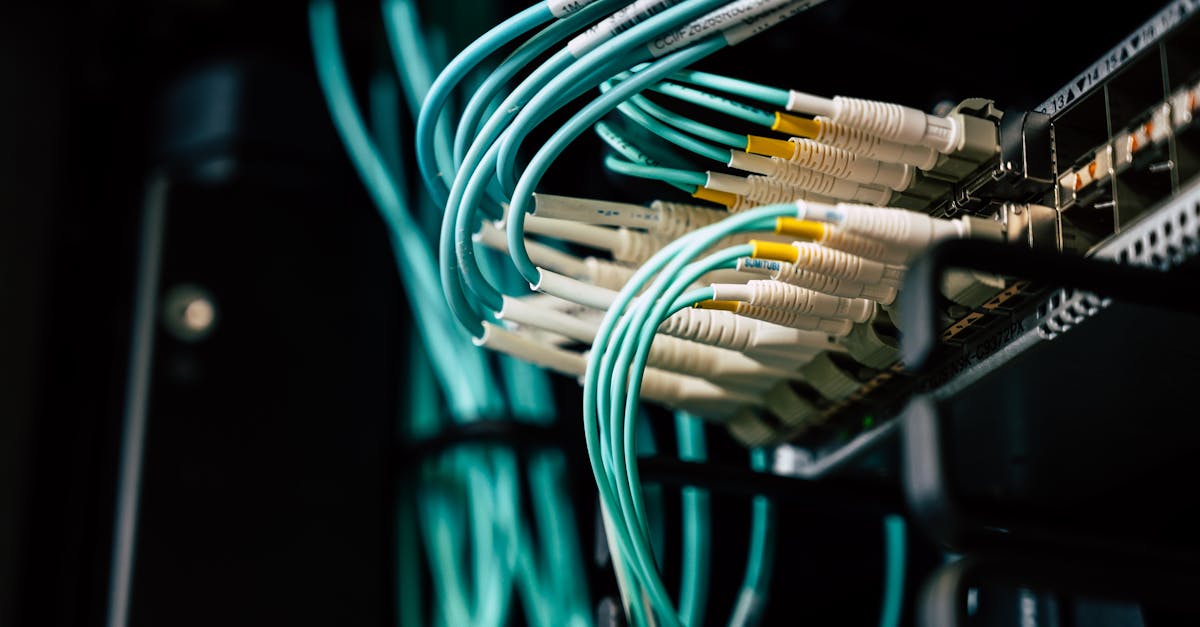
The technology that delivers these speeds is just as important as the number itself. The gold standard for gigabit internet is fiber-optic service. Fiber sends data as pulses of light through glass strands, allowing for incredibly high speeds and, crucially, symmetrical performance. This means your upload speeds are just as fast as your download speeds. Providers like AT&T Fiber and Verizon Fios are known for this. Some cable internet providers, including Xfinity and Spectrum, also offer gigabit-speed plans over their existing coaxial cable networks. While these plans provide very fast downloads, their upload speeds are typically much lower, a key detail often highlighted in user reviews.
Who Actually Needs 1 Gig Speeds?
Let's be honest: most people do not need a gigabit internet plan. If your household's internet use consists of streaming Netflix on one or two screens, browsing social media, and checking email, a plan with 200-500 Mbps is more than sufficient and will save you money. Upgrading to a gigabit plan in this scenario would be like buying a race car for a trip to the grocery store—you'll never come close to using its full potential. Being realistic about your needs is the best way to avoid overpaying for bandwidth you won't use.
However, for certain types of users, a 1 Gig plan is a game-changer. These are the "power users" who push their connection to its limits. This includes large households where multiple people are simultaneously engaged in high-bandwidth activities. Think of a family where one person is on a 4K Zoom call, another is downloading a massive video game, and two others are streaming 4K movies in different rooms. For these scenarios, gigabit internet provides enough bandwidth for everyone to have a seamless experience without lag or buffering.
The upgrade is most beneficial for:
- Large families or homes with numerous connected devices (laptops, smart TVs, security cameras, gaming consoles).
- Serious online gamers who require the lowest possible latency (ping) for a competitive edge.
- Content creators, video editors, and designers who frequently upload and download massive files.
- Remote workers who rely on cloud applications, VPNs, and transferring large datasets.
- Tech enthusiasts running home servers or a complex smart home ecosystem with dozens of devices.

Decoding Gigabit Internet Reviews: What to Look For
When you're scrolling through reviews for gigabit internet, it's easy to get fixated on speed test results. While speed is important, it's only one piece of the puzzle. The most helpful reviews look beyond the numbers to describe the overall quality of the service. Look for comments about reliability and uptime. Is the connection stable, or does it drop out during peak hours? A slightly slower but rock-solid connection is always better than a faster one that's unpredictable.
Pay close attention to mentions of upload speed, especially the term "symmetrical." Reviews for fiber providers will often praise the fast upload speeds, which make video calls crystal clear and uploading large files to the cloud effortless. Conversely, a common complaint in reviews for cable gigabit plans is the slow upload speed. If your work or hobbies involve sending large amounts of data, this is a critical differentiator that speed tests alone might not emphasize.
Finally, use reviews to uncover the true cost of service. Reviewers often vent about unexpected price hikes after a 12-month promotional period ends, mandatory equipment rental fees that aren't clearly advertised, and restrictive data caps. A plan that looks like a great deal upfront can become expensive quickly. The most insightful reviews will give you a clear picture of the long-term cost and any contractual strings attached.
Common Praise and Complaints for Gigabit Providers
Across different providers and technologies, certain patterns emerge in customer reviews. For fiber-optic gigabit services, the praise is often centered on consistency and performance. Users frequently report getting speeds very close to the advertised 1,000 Mbps, both for downloads and uploads. The low latency, or ping, is another commonly cited benefit, making these plans a favorite among the online gaming community. The general sentiment is that fiber connections are incredibly stable and deliver a truly premium experience.
On the other hand, complaints often revolve around factors beyond raw speed. For cable gigabit plans, the most significant and recurring complaint is the asymmetrical speed structure. Users are often frustrated that their blazing-fast download speed is paired with an upload speed that can be 20 to 30 times slower, impacting video conferencing and file sharing. Across all provider types, customer service is a frequent point of contention in negative reviews. Long wait times, unhelpful support, and complicated billing issues are common grievances. This highlights the importance of choosing a provider known not just for speed, but for supporting its customers effectively.

Don't Forget Your Home Network: The Wi-Fi Factor
Signing up for a gigabit internet plan is only half the battle. To actually experience those speeds, your home network needs to be up to the task. The fastest internet connection in the world won't feel fast if it's being bottlenecked by an old, underpowered Wi-Fi router. The equipment supplied by your internet service provider (ISP) is usually adequate, but it may not provide the best coverage for a large home with multiple floors or thick walls.
It's also important to understand the difference between a wired and a wireless connection. To get the absolute fastest speeds your plan offers, you need to plug your device directly into the router with an Ethernet cable. This is the best practice for stationary devices like a desktop computer, gaming console, or smart TV. To get speeds approaching 1 Gbps over Wi-Fi, you'll need a modern router that supports the Wi-Fi 6 or Wi-Fi 6E standard, as well as devices (like your laptop or phone) that are also compatible with these newer standards. Without them, you simply won't be able to take full advantage of your gigabit connection wirelessly.

How to Find the Best Gigabit Plan for Your Address
Before you get too deep into comparing gigabit reviews, you need to answer the most fundamental question: which providers are actually available at your home? Internet availability is hyper-local and can vary dramatically from one address to the next. Your neighbor across the street might have access to three different fiber providers while your building is only wired for cable. This is the single biggest factor in your decision, as you can only choose from the companies that have invested in building infrastructure to your front door.
Trying to figure this out on your own can be a frustrating process of visiting multiple websites, entering your address repeatedly, and trying to decipher service maps. This is where a comprehensive comparison tool is invaluable. Instead of doing the legwork yourself, a service like KonnectX allows you to enter your address once and see a complete list of every internet provider available to you—from major national brands like AT&T and Spectrum to regional fiber companies. You can easily compare the technologies they offer (fiber, cable, 5G home internet), their plan speeds, and their current pricing all in one place.
Once you've identified the best options, the process is simple. You can connect with a specialist who can validate the offers, answer any specific questions you have about the service or installation process, and place the order for you. This unified approach saves you time and ensures you're making your choice based on a full understanding of the market at your exact location, all at the same price you'd get by going to the provider directly.

Key takeaways
- Gigabit internet (1,000 Mbps) is primarily delivered via fiber-optic networks, which offer superior symmetrical upload and download speeds.
- Most households don't need gigabit speeds; it's best for power users, content creators, serious gamers, and large families with many simultaneously connected devices.
- When reading reviews, focus on reliability, actual speeds versus advertised, customer service, and hidden fees—not just the maximum download number.
- Your home network hardware is critical. You need a modern Wi-Fi 6 (or newer) router and compatible devices to get the most out of a gigabit connection.
- Provider availability is hyper-local. Use a comparison service to see every fiber, cable, and 5G option available at your specific address before choosing.
FAQ
Is 1 Gbps the same as 1 GBps?
No. Internet speed is measured in gigabits per second (Gbps), while file size is measured in gigabytes (GB). There are 8 bits in a byte, so a 1 Gbps connection can theoretically download a 1 GB file in about 8 seconds.
Will gigabit internet stop all video buffering?
Almost always, yes. With a 1,000 Mbps connection, your internet speed is rarely the cause of buffering. If you still experience it, the problem is more likely your Wi-Fi signal strength, an issue with the streaming service's servers, or an older device.
What is a good upload speed for gigabit internet?
A true gigabit connection from a fiber provider offers symmetrical speeds, meaning your upload speed will also be close to 1,000 Mbps. Gigabit plans over cable typically have much lower upload speeds, often in the 20-50 Mbps range.
Do I need a special modem or router for gigabit internet?
Yes, you need equipment that can handle those speeds. Your provider will supply a compatible modem or gateway. For the best wireless performance, you should use a router that supports the Wi-Fi 6 (802.11ax) or Wi-Fi 6E standard.
Is fiber gigabit internet better than 5G home internet?
In terms of raw speed, reliability, and low latency, fiber-optic gigabit internet is superior to 5G home internet. However, 5G from providers like T-Mobile and Verizon is a very fast and viable alternative in areas where high-speed fiber or cable is not available.
How much does gigabit internet usually cost?
Prices vary widely based on your location and the provider. While it's a premium service, competition has made it more affordable. Expect to pay more than a standard 300-500 Mbps plan, often with promotional pricing for the first year that can increase significantly afterward.
What's the difference between gigabit and multi-gig internet?
Gigabit internet refers to a plan with speeds of 1 Gbps (1,000 Mbps). Multi-gig internet offers speeds even faster than that, such as 2 Gbps or 5 Gbps. These plans are becoming more common from fiber providers but are only necessary for the most extreme power users.