The Best Fiber Optic Internet Providers of 2026
Discover the top fiber optic internet providers of 2026. Compare plans, speeds, and pricing from AT&T Fiber, Google Fiber, Verizon Fios, and more.
The best fiber optic internet providers in the US for 2026 are AT&T Fiber, Google Fiber, Verizon Fios, and Frontier Fiber, known for their multi-gigabit speeds and high reliability. These providers deliver the fastest and most dependable internet connection available today by transmitting data as pulses of light through glass strands, offering symmetrical upload and download speeds that far surpass traditional cable or DSL.
Choosing the right fiber provider, however, depends entirely on who services your specific address. While fiber networks are expanding rapidly thanks to significant private and public investment, availability is still limited and can vary from one neighborhood to the next. This guide breaks down everything you need to know about fiber internet in 2026, from the leading companies and what they charge to how you can find the best plan for your home.
What is Fiber Optic Internet and Why Is It Better?
Fiber optic internet represents the gold standard of home connectivity. Unlike cable or DSL internet, which use copper wires to transmit electrical signals, fiber optic technology uses thin strands of glass to send data as pulses of light over long distances. This fundamental difference allows for exponentially faster speeds and a more stable connection.
The primary advantage is symmetrical speeds, meaning your upload speeds are just as fast as your download speeds. This is a game-changer for video conferencing, uploading large files, and online gaming. Cable internet, by contrast, typically offers much slower upload speeds. Fiber is also more reliable because it's immune to the electromagnetic interference that can affect copper lines and isn't subject to the network congestion that can slow down cable users during peak hours. The result is a consistently fast, low-latency connection powerful enough for even the most demanding households.

Top National and Regional Fiber Internet Providers
While dozens of smaller regional companies offer excellent service, the US fiber internet market is led by a handful of major players with extensive networks. Understanding who they are and where they operate is the first step in finding a plan.
AT&T Fiber is one of the largest fiber providers in the country, with a massive footprint across 21 states. They are known for their straightforward pricing and wide range of speed tiers, including popular multi-gigabit plans offering up to 5 Gbps. Verizon Fios is another top contender, primarily serving major metropolitan areas in the Northeast. Fios consistently ranks at the top for customer satisfaction due to its network's stellar performance and reliability.
Google Fiber, while only available in a select number of cities, continues to be a benchmark for the industry with its focus on pure speed and a simple customer experience. Frontier Fiber has also become a major force, aggressively expanding its fiber network in over 25 states and offering competitive multi-gigabit plans. Other significant providers include Quantum Fiber (from Lumen) and various local and municipal fiber networks that often provide fantastic service and competitive pricing in their specific communities.
How to Compare Fiber Internet Plans in 2026
With most top-tier providers offering speeds of 1 Gbps (1,000 Mbps) or higher, choosing a plan is less about finding the fastest option and more about finding the right value for your needs. A 300-500 Mbps plan is often more than enough for most families, supporting streaming, gaming, and remote work across multiple devices. Gigabit and multi-gigabit plans are best for power users, content creators who upload massive files, or large households with dozens of connected devices.
When comparing, look beyond the advertised speed. Consider the monthly price after the promotional period ends, whether equipment like a router is included, and if there are any data caps or contracts. Fortunately, most fiber providers have moved to unlimited data and no-contract plans, which gives you more flexibility.
| Provider | Common Speeds | Typical Starting Price | Best For |
|---|---|---|---|
| AT&T Fiber | 300 Mbps - 5 Gbps | $55 - $180/mo | Widespread availability and multi-gig options |
| Verizon Fios | 300 Mbps - 2.3 Gbps | $50 - $120/mo | High customer satisfaction and network reliability |
| Google Fiber | 1 Gbps - 8 Gbps | $70 - $150/mo | Cutting-edge speeds and simplicity |
| Frontier Fiber | 500 Mbps - 5 Gbps | $50 - $155/mo | Rapidly expanding network and competitive pricing |
Understanding Fiber Internet Pricing and Fees
Fiber internet pricing has become increasingly competitive, but it's important to understand what you're paying for. Entry-level plans with speeds between 300 and 500 Mbps typically start around $50 to $60 per month. The most popular tier, 1 Gbps (Gigabit) internet, usually falls in the $70 to $90 range. For ultra-fast multi-gigabit plans (2 Gbps or more), expect to pay $100 per month or significantly more.
Several factors influence your final bill. Most providers offer promotional pricing for the first 12 or 24 months, after which the rate may increase. Be sure to ask what the standard rate will be. Equipment costs are another variable. While many fiber providers now include a Wi-Fi router at no extra cost, some may charge a monthly rental fee of $10 to $15. Finally, watch out for one-time installation fees, though these are often waived if you order online or sign up for autopay. The best way to save is to choose a speed tier that matches your actual usage—paying for a 5 Gig plan you don't need is the fastest way to overspend.

Is Fiber Internet Available At My Address?
The single biggest challenge with fiber internet is its limited availability. Unlike cable or satellite, which are widely accessible, fiber networks have been built out block by block, city by city. This means you could have access to multiple fiber providers while your friend across town has none. Your neighbor across the street might have AT&T Fiber while your side of the street only has cable.
Because coverage is so specific, the only way to know for sure what's available is to check your exact address. You could visit the websites of AT&T, Verizon, Frontier, and others one by one, entering your address each time. However, this can be time-consuming and you might miss a smaller regional provider.
A more efficient approach is to use a comparison service like KonnectX. By entering your address once, you can see a complete list of every internet provider—including fiber, cable, 5G home internet, and satellite—that serves your home. This ensures you see all your options in one place, making it easy to compare plans and find the best technology at the best price for you.

What to Expect During a Fiber Installation
Getting fiber internet installed is a more involved process than setting up cable, but it's straightforward. Once you place your order, you'll schedule an appointment for a technician to visit your home. The appointment usually takes between two and four hours.
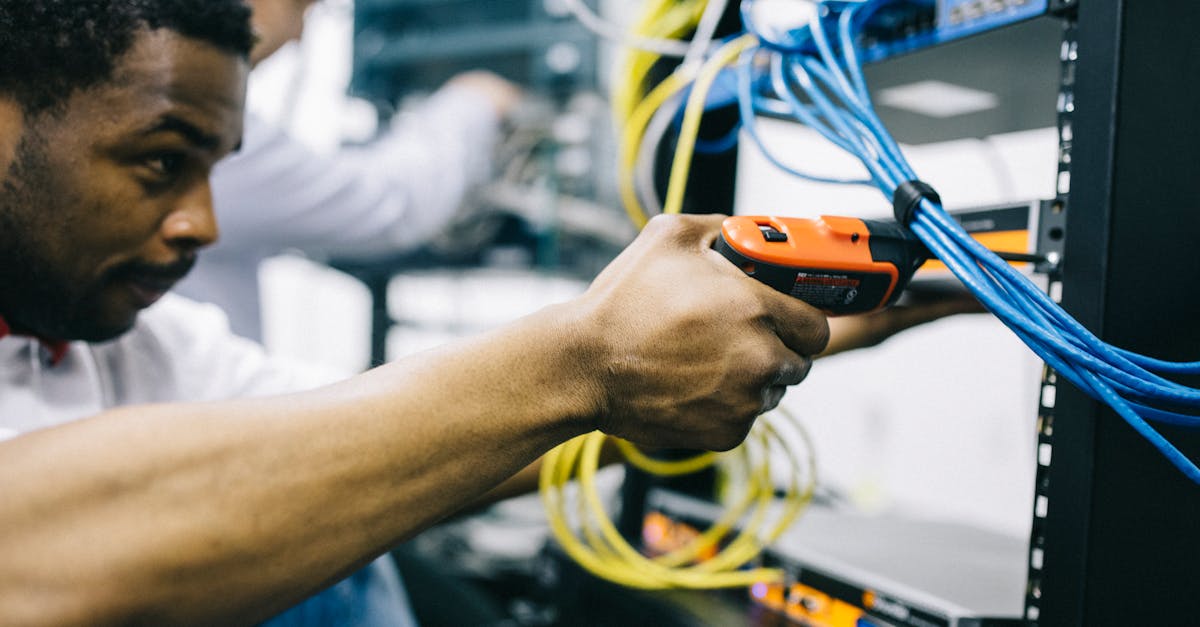
The technician's first job is to run a durable fiber optic cable from a nearby utility pole or underground terminal to the outside of your house. They will then drill a small hole to bring the line inside. This line connects to a small box called an Optical Network Terminal (ONT), which is typically mounted on an interior wall, often in a garage, basement, or closet. The ONT converts the light signals into an Ethernet connection. From there, an Ethernet cable runs to your Wi-Fi router, which broadcasts the signal throughout your home.
To prepare, make sure an adult is home for the entire appointment window and clear a path for the technician to the area where you want the line to enter your home. Also, have an idea of where you want the Wi-Fi router placed—a central location is usually best for optimal coverage.
The Future of Fiber: Expansion and Multi-Gig Speeds
The future of home internet in the United States is undeniably fiber. Billions of dollars in federal and state funding, most notably from the BEAD (Broadband Equity, Access, and Deployment) Program, are accelerating the expansion of fiber networks into unserved and underserved areas, including many rural communities that have been left behind.
At the same time, providers are pushing the boundaries of speed. While 1 Gbps was once the pinnacle, multi-gigabit plans of 2 Gbps, 5 Gbps, and even 8 Gbps are now available in many cities. As our reliance on data-hungry applications like 8K streaming, virtual reality, and the Internet of Things (IoT) grows, the symmetrical bandwidth and low latency of fiber will become not just a luxury, but a necessity.
Find the Best Fiber Provider for Your Home
Fiber optic internet offers a transformative upgrade for your home, but the best provider is always the one available at your address. Because availability is so specific, the crucial first step is to see which companies serve your home. From there, you can compare their speed tiers, pricing, and terms to find the perfect fit for your budget and lifestyle.
Ready to see your options? Enter your address on our website to instantly compare every fiber, cable, and 5G internet provider available to you. If you prefer to talk it through, our specialists are available by phone to help you compare plans and place your order at the exact same price as the providers, all with one simple call and at no extra cost.
Key takeaways
- Fiber optic internet provides the fastest, most reliable connection with symmetrical upload and download speeds.
- The leading national fiber providers in 2026 are AT&T Fiber, Verizon Fios, Google Fiber, and Frontier Fiber.
- Fiber availability is highly specific and varies street by street; you must check your exact address to see your options.
- Monthly prices for fiber typically range from $50 for basic plans to over $100 for multi-gigabit speeds.
- Most fiber plans now come with unlimited data and no annual contracts, offering greater flexibility than older internet technologies.
FAQ
What is the main advantage of fiber internet?
The main advantage of fiber internet is its symmetrical speeds, meaning uploads are just as fast as downloads. It also offers higher potential speeds, lower latency, and greater reliability compared to cable or DSL.
How much does fiber internet cost per month?
In 2026, expect to pay around $50-$60 per month for entry-level fiber plans (300-500 Mbps). Gigabit plans (1,000 Mbps) typically cost $70-$90 per month, while multi-gig plans can exceed $100.
Is fiber internet faster than cable?
Yes, fiber internet is generally faster than cable, especially for uploading. While both can offer gigabit download speeds, fiber's symmetrical upload speeds are dramatically faster than cable's, which is crucial for video calls, gaming, and uploading large files.
How can I find out if fiber is available in my area?
The only way to know for sure is to check availability at your specific address. You can use a comparison tool like KonnectX to see all fiber, cable, and 5G providers that service your home in a single search.
Who is the largest fiber provider in the US?
AT&T has one of the largest fiber networks in the United States, offering service in 21 states and continually expanding its footprint.
Do I need a special router for fiber internet?
Yes, you need a router that can handle the high speeds of a fiber connection. Most fiber providers include a compatible Wi-Fi router with your plan, often at no additional monthly cost.
Does fiber internet have data caps?
Almost all major fiber internet providers, including AT&T, Verizon Fios, and Google Fiber, offer unlimited data with no caps on their standard plans.
Is fiber internet good for gaming?
Fiber internet is the best option for online gaming. Its extremely low latency (or 'ping') and high, symmetrical speeds provide a smooth, lag-free experience that is superior to cable or any other internet type.